Ever have one of those days where, for one reason or another, it’s difficult to decide what to wear to the office? That was my dilemma yesterday. It was casual Friday at the Sons of Norway Home Office, so my options were more expansive than usual. In the end I picked this shirt. As most any kid who grew up in the late 70’s/80’s can relate, Star Wars is the be-all-end-all of youth culture. I wear my SW gear proudly and have no shame in showing off how nerd-core I am every chance I get.
Now I bet you are wondering what on earth this has to do with Sons of Norway or Norway in general, right?
Simple. This month marks the 30th anniversary of The Empire Strikes Back being released.
Still not connecting?
Back in May of 1980, Norway was rocketed into forefront of SW culture upon the release of Empire. You see the small town of Finse and the Hardangerjøkulen glacier played host to most of the SW cast, as the shooting location for the far-flung ice-planet, Hoth. Even 30 years later stories are still told of how nearly 18 feet of snow fell and temps plummeted to -20 F during the filming. Apparently the weather was so sever that the entire cast and crew were trapped in their hotel, at times, because the large amounts of snow falling blocked all doors and exits.
Thanks to Norway I, and many other SW geeks out there, spent many a winter day reenacting all the Hoth scenes. Whether it was pretending to be riding a Tauntaun across a snowfield, hiding from a probe droid or fighting a Wampa with a pretend lightsaber, it was the stunning landscape of Norway that fed my imagination and the imaginations of a million other kids in the 80s!
Thank you, Norway, for being the inspiration for so many great childhood memories! With that, I leave you with one last thought for the day:
What would Darth Vader have looked like in a Bunad?
Showing posts with label Today in History. Show all posts
Showing posts with label Today in History. Show all posts
Saturday, May 29, 2010
Friday, April 9, 2010
April 9: Never Forget
Today is an important day in the history of Norway, as it marks the 70th anniversary of an event that would have a major impact on Norway’s national identity as a country that believed in freedom and independence above all else.
On April 9, 1940 Nazi Germany launched Operation Weserübung, the full invasion of Norway. By the end of the day, citizens of Norway would see German warships in the fjords leading to Oslo and hear the voice of Vidkun Quisling making the first-ever radio-effected coup d'etat. In memorial coverage of the invasion, Aftenposten recently wrote that, “Norway was woefully unprepared for the attack by the forces of Adolf Hitler. Norway had been neutral during World War I but reports of its horrors gave rise to widespread pacifism in Norway that extended through the 1930s. By the time Hitler’s aggression was finally recognized, it was too late to build up a military defense.”
It was a dark day for Norwegians to be sure.
But today, 70 years later, the event is memorialized in places like Oscarborg fortress and elsewhere throughout Norway. Many Norwegians are participating in some form of ceremony today, in remembrance of the events that kicked off Norway’s now famous resistance movement which led to the eventual reclaiming of their homeland. Additionally, Norway’s state archives, the Riksarkivet marked the anniversary by releasing thousands of pages of war documents, which reveal new details about the resistance effort, the deportation of Norwegian Jews and plans by Vidkun Quisling to set up a Norwegian Aryan colony in the former Soviet Union.
Events like this should never be forgotten, if for no other reason than to prevent them from happening again. That said, I’d like everyone reading this today to join Norwegians around the world in taking a moment to pause in reflection of the horrors of what happened in 1940, and during the war years that followed.
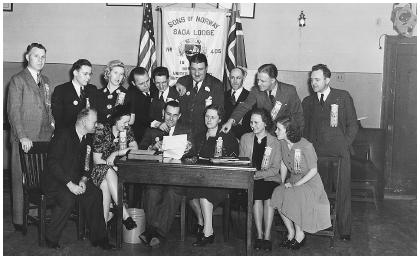 Sons of Norway members in New York in 1940, drawing up papers for a formal protest of Germany's invasion of Norway.
If Norway circa World War II, or its resistance movement are of interest to you, I highly recommend you check out the October 2008 issue of Viking magazine, or click here to read stories from the resistance that we posted on the blog last year. There's also some great articles over at newsinenglish.no on the remembrance and the release of war documents this year.
On April 9, 1940 Nazi Germany launched Operation Weserübung, the full invasion of Norway. By the end of the day, citizens of Norway would see German warships in the fjords leading to Oslo and hear the voice of Vidkun Quisling making the first-ever radio-effected coup d'etat. In memorial coverage of the invasion, Aftenposten recently wrote that, “Norway was woefully unprepared for the attack by the forces of Adolf Hitler. Norway had been neutral during World War I but reports of its horrors gave rise to widespread pacifism in Norway that extended through the 1930s. By the time Hitler’s aggression was finally recognized, it was too late to build up a military defense.”
It was a dark day for Norwegians to be sure.
But today, 70 years later, the event is memorialized in places like Oscarborg fortress and elsewhere throughout Norway. Many Norwegians are participating in some form of ceremony today, in remembrance of the events that kicked off Norway’s now famous resistance movement which led to the eventual reclaiming of their homeland. Additionally, Norway’s state archives, the Riksarkivet marked the anniversary by releasing thousands of pages of war documents, which reveal new details about the resistance effort, the deportation of Norwegian Jews and plans by Vidkun Quisling to set up a Norwegian Aryan colony in the former Soviet Union.
Events like this should never be forgotten, if for no other reason than to prevent them from happening again. That said, I’d like everyone reading this today to join Norwegians around the world in taking a moment to pause in reflection of the horrors of what happened in 1940, and during the war years that followed.
Sons of Norway members in New York in 1940, drawing up papers for a formal protest of Germany's invasion of Norway.If Norway circa World War II, or its resistance movement are of interest to you, I highly recommend you check out the October 2008 issue of Viking magazine, or click here to read stories from the resistance that we posted on the blog last year. There's also some great articles over at newsinenglish.no on the remembrance and the release of war documents this year.
Wednesday, March 17, 2010
St Patrick's Day: A Norwegian Holiday?
Driving in to work today there certainly was a lot of green to be seen (and I don’t mean grass or blooming plants). It's St Patrick’s Day again and there are A LOT of folks “getting their Irish on” today. Be they Irish diaspora or fans of good old fashioned revelry, there’s never a shortage of people who like to make a big celebration of St Patrick’s Day and Irish heritage & culture around these parts.
That being the case, I thought it only fair to blog about Norway’s impact on Irish heritage and culture. For example, can you tell me what Dublin, Cork, Wexford, Limerick, Howth and Fingall all have in common? I’ll give you this one—at one point each of these well-known Irish cities were Norwegian/Viking settlements.
That’s right, in fact the Viking/Irish interaction was so well known it was not only documented in Viking saga’s, it was also detailed in the Annals of the Kingdom of Ireland by the Four Masters the Annals of Clonmacnoise and The War of the Gaedhil with the Gaill. Further accounts can be found in the arabic writings of the accounts of Ibn Ghazal.
You see in the 700s, pressure on land in Scandanavia had forced many nobles and warriors to seek land elsewhere. Some of these were younger sons, who stood to inherit nothing of their father's estate. Noblemen with little to lose began to gather together groups of warriors and go down the coast pillaging settlements. With the invention of Viking long boats, the raiders eventually began reaching further across the cold waters of the North Sea. By the late 700’s the Vikings were finding themselves on the shores of modern day England and Ireland.
At first the Vikings came for riches and slaves, finding both in large supply within Ireland’s abundant Christian monasteries. Often, the slaves were sold to Vikings traveling back to Norway, but many were kept in Ireland working in a Viking-held town (I’ve heard that this was such a prevalent practice that even today there are remnants of Irish tartans found in Norwegian bunad materials).
However, this raiding period would not last long, and by 950 the Vikings had stopped raiding in Ireland altogether and developed instead as traders and settled in the lands around their towns. It was during this time that Norwegian culture really affected Ireland by providing place names, like Dublin, Cork, Limerick, Waterford, Wexford, Strangford, Leixlip, Carlingford, Youghal, Howth, Dalkey and Fingall [an area of modern-day Dublin]. Also a few of their words were also adopted into the Irish language.
So, today, when you celebrate St Patrick’s Day with a green beer and an old folk song, be sure to offer at least one toast to Norway.
If you want to read more about Norway’s interaction with Ireland, I suggest:
The Viking Answer Lady
and
Wesley Johnston's pre-Norman history
That being the case, I thought it only fair to blog about Norway’s impact on Irish heritage and culture. For example, can you tell me what Dublin, Cork, Wexford, Limerick, Howth and Fingall all have in common? I’ll give you this one—at one point each of these well-known Irish cities were Norwegian/Viking settlements.
That’s right, in fact the Viking/Irish interaction was so well known it was not only documented in Viking saga’s, it was also detailed in the Annals of the Kingdom of Ireland by the Four Masters the Annals of Clonmacnoise and The War of the Gaedhil with the Gaill. Further accounts can be found in the arabic writings of the accounts of Ibn Ghazal.
You see in the 700s, pressure on land in Scandanavia had forced many nobles and warriors to seek land elsewhere. Some of these were younger sons, who stood to inherit nothing of their father's estate. Noblemen with little to lose began to gather together groups of warriors and go down the coast pillaging settlements. With the invention of Viking long boats, the raiders eventually began reaching further across the cold waters of the North Sea. By the late 700’s the Vikings were finding themselves on the shores of modern day England and Ireland.
At first the Vikings came for riches and slaves, finding both in large supply within Ireland’s abundant Christian monasteries. Often, the slaves were sold to Vikings traveling back to Norway, but many were kept in Ireland working in a Viking-held town (I’ve heard that this was such a prevalent practice that even today there are remnants of Irish tartans found in Norwegian bunad materials).
However, this raiding period would not last long, and by 950 the Vikings had stopped raiding in Ireland altogether and developed instead as traders and settled in the lands around their towns. It was during this time that Norwegian culture really affected Ireland by providing place names, like Dublin, Cork, Limerick, Waterford, Wexford, Strangford, Leixlip, Carlingford, Youghal, Howth, Dalkey and Fingall [an area of modern-day Dublin]. Also a few of their words were also adopted into the Irish language.
So, today, when you celebrate St Patrick’s Day with a green beer and an old folk song, be sure to offer at least one toast to Norway.
If you want to read more about Norway’s interaction with Ireland, I suggest:
The Viking Answer Lady
and
Wesley Johnston's pre-Norman history
Friday, September 4, 2009
The Search for Amundsen Continues
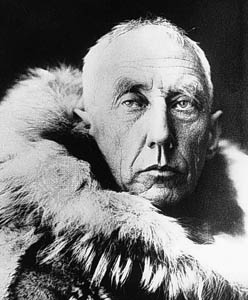 Much in the same way that Americans get swept up in the mystery surrounding the disappearance of Amelia Erhart, so too do Norwegians when the topic turns to Roald Amundsen.
Amundsen, best known for his polar expeditions, racked up an unprecedented list of firsts as an explorer. He led the first Antarctic expedition to reach the South Pole between 1910 and 1912. He was also the first person to reach both the North Pole and is known as the first to traverse the Northwest Passage.
 Then in June of 1928, while flying a rescue mission, Amundsen and his crew of five disappeared somewhere over the Barents Sea. The rescue mission was for the crew of the airship, Italia, who had crashed on their own polar expedition.
The disappearance was major news at the time, not just in Norway but around the world. Amundsen, the man who braved uncharted territories as a pastime, seemed to have vanished into thin air. For months the Norwegian navy searched and searched for their national hero, but to no avail. In the end, the search was called off in September of 1928, having found nothing more than a wing-float and bottom gasoline tank from Amundesn's plane near the Tromsø coast.
Now, 81 years later, the search is back on and is garnering a lot of attention in Norway. Right now, as I type this, Norwegian naval vessels are searching a new location in the Barents Sea. For the past 10 days two vessels have been scouring 36 square nautical miles of seabed close to the island of Bjørnøya in a bid to locate the remains of Amundsen’s seaplane.
This new expedition has the opportunity to put to rest the various theories and postulations on how the plane crashed and why. Finally, a nation may be able to lay one of its greatest heroes to rest. I'll try and find more info on their search results and post them as I can.
Wednesday, May 20, 2009
Today in History: Ingvar Ambjørnsen-Haefs
Today is the 53rd birthday for the famous Norwegian author, Ingvar Ambjørnsen-Haefs. Doesn't sound familiar to you? Well he's the guy who wrote the books Utsikt til paradiset, Fugledansen, Brødre i blodet and Elsk meg i morgen.
Still doesn't ring a bell?
What if I told you that those four books comprise the "Elling Trilogy" (nevermind the fact that a trilogy is technically supposed to be three)? Getting warmer? Yeah, Ingvar is the guy who wrote the story that eventually became the 2001 Oscar nominated movie, Elling. The story is a very quirky, fun and emotional one that most people would enjoy. In fact, when the film was released here in the U.S. the Sons of Norway hosted a premiere at the Lagoon Cinema in the fashionable Uptown Neighborhood of Minneapolis, MN.
Also, for those who have already seen the Norwegian version of the film there were plans as late as 2004 for an English version to be filmed. At the time Kevin Spacey was attached to produce and to play the title role. Unfortunatley, due to a number of issues that film was not to be. Too bad.
For those of you who are interested in seeing the Norwegian version, which I highly reccomend, call the Sons of Norway HQ and ask for Colin in the Media Lending Library. He can help you check out Elling, or one of our many other films, for a lodge event.
Still doesn't ring a bell?
What if I told you that those four books comprise the "Elling Trilogy" (nevermind the fact that a trilogy is technically supposed to be three)? Getting warmer? Yeah, Ingvar is the guy who wrote the story that eventually became the 2001 Oscar nominated movie, Elling. The story is a very quirky, fun and emotional one that most people would enjoy. In fact, when the film was released here in the U.S. the Sons of Norway hosted a premiere at the Lagoon Cinema in the fashionable Uptown Neighborhood of Minneapolis, MN.
Also, for those who have already seen the Norwegian version of the film there were plans as late as 2004 for an English version to be filmed. At the time Kevin Spacey was attached to produce and to play the title role. Unfortunatley, due to a number of issues that film was not to be. Too bad.
For those of you who are interested in seeing the Norwegian version, which I highly reccomend, call the Sons of Norway HQ and ask for Colin in the Media Lending Library. He can help you check out Elling, or one of our many other films, for a lodge event.
Sunday, May 17, 2009
Hurrah for Syttend Mai!
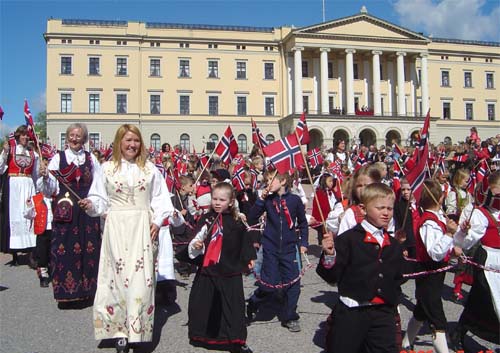
Today millions in Norway, the U.S. and Canada are celebrating Norway's 195th Constitution Day, also called Syttende Mai (17th of May). The celebration marks the signing of Norway's constitution in Eidsvoll, which declared Norway to be an independent nation.
Celebrations are happening today in most major U.S. cities and if you want to see what's going on in your neck of the woods, check out the Events Calendar at sonsofnorway.com.
Tuesday, May 5, 2009
Today in History: A Government in Exile
On this day in 1940 Norway formed a Government in Exile in London. However the story really begins almost a month earlier on the afternoon of April 9, 1940. Following the initial Nazi invasion of Norway the Storting knew that it would be pursued, oppressed and possibly dissolved, so it convened and unanimously enacted the Elverumsfullmakten (Elverum Authorization). This authorization granted the Norwegian Cabinet full powers to protect the country until such time as the Storting could meet again. This effectively gave full governmental control to King Haakon VII and his cabinet while they were in London.
Saturday, April 18, 2009
Today in History: Thor Heyerdahl
Today is a sad day that marks the 7th anniversary of the passing of Thor Heyerdahl, Norwegian adventurer and ethnographer. Heyerdahl was most famous for his 1947 Kon-Tiki expedition that took him from across the Pacific Ocean to prove that it was possible for Pre-Columbian South Americans to have traveled to, and settled, Polynesia (it should be noted that Hyerdahl's thesis was recently given added support from chickens). A true adventurer; he once commented, "Borders? I have never seen one. But I have heard they exist in the minds of some people."
Besides the Kon-Tiki expedition, Heyerdahl was also the driving force behind the Fatu Hiva and Rapa Nui (Easter Island) expeditions as well as the construction of the Ra, Ra II a Tigris reed-boats. All of which were done to prove the possibility of pan-oceanic migration and cross-cultural exchange in the Pre-Columbian world.
In the end, after all his expeditions and adventures, Thor Heyerdahl passed away quietly from a brain tumor at the age of 87. His impact on Norway and the entire world was such that the Norwegian government granted Heyerdahl the honor of a state funeral at the Oslo Cathedral.
Besides the Kon-Tiki expedition, Heyerdahl was also the driving force behind the Fatu Hiva and Rapa Nui (Easter Island) expeditions as well as the construction of the Ra, Ra II a Tigris reed-boats. All of which were done to prove the possibility of pan-oceanic migration and cross-cultural exchange in the Pre-Columbian world.
In the end, after all his expeditions and adventures, Thor Heyerdahl passed away quietly from a brain tumor at the age of 87. His impact on Norway and the entire world was such that the Norwegian government granted Heyerdahl the honor of a state funeral at the Oslo Cathedral.
Friday, March 27, 2009
Today in History: Wreck of the Alexander Kielland
Today marks the 27th anniversary of Norway's worst maritime disaster since the WWII era. On this day in 1980 the Norwegian semi-submersible rig, Alexander Kielland, capsized with more than 200 workers on board. The rig capsized in the Ekofisk oil field, which is approximately 320 km east of Dundee, Scotland.
Of the more than 200 men on board when the event took place, 123 were killed and less than 90 survived the ordeal. While there were more than enough life rafts, the high death toll was mostly due to the facts the capsizing happened very quickly--in a matter of minutes--and that most of the workers were caught in the mess hall and/or cinema areas of the rig. Also, it was determined that some safety features of the life rafts actually worked against rescue efforts in disabling the rafts and not allowing them to float free of the rig.
The wreckage was massive and it would take more than three years to recover all the bodies before the rig could be scuttled.
Of the more than 200 men on board when the event took place, 123 were killed and less than 90 survived the ordeal. While there were more than enough life rafts, the high death toll was mostly due to the facts the capsizing happened very quickly--in a matter of minutes--and that most of the workers were caught in the mess hall and/or cinema areas of the rig. Also, it was determined that some safety features of the life rafts actually worked against rescue efforts in disabling the rafts and not allowing them to float free of the rig.
The wreckage was massive and it would take more than three years to recover all the bodies before the rig could be scuttled.
Friday, March 20, 2009
Today in History: Henrik Ibsen
 It was 181 years ago today that the father of modern drama was born. Happy Birthday Henrik!
Born into a well-to-do merchant family in Skien, Norway, Ibsen left home at the age of 15 to become an apprentice pharmacist. Not caring for this profession, he moved to Oslo as a young adult with hopes of matriculating at Oslo University. This was not to be his future, either, when he failed some of the entrance exams. This string of bad luck would, in the end, be a stroke of good luck for all of Norway because these false starts and wrong turns intensified Ibsen's desire to be a full-time playwright.
His career as a playwright was not always an easy one, having little success at first he was often forced to work in the theater as a producer and director instead. In fact some periods were so bad that Ibsen went into a self-imposed exile in Italy for nearly 30 years. He did not return to Norway until after he was recognized as a noted playwright. Over the course of his 56 year career, Ibsen would go on to author nearly 30 plays, including the famous A Doll's House.
Ibsen died in Oslo on May 23, 1906 after a series of strokes. An oft repeated story says that when a nurse assured one of his visitors that he was a little better, Ibsen sputtered "On the contrary" and died.
Even though he's been gone for more than a century, his impact on the world of modern drama is still widely recognized. In fact, in 2006, a number of countries celebrated Ibsen Year to commemorate the centennial of his passing.
Thursday, March 12, 2009
Today in History: Gustav Vigeland
 On this day in 1943 Norway mourned the passing of one of its most well-known artists, Gustav Vigeland.
Vigeland was born in a small coastal town, called Mandal, and raised by a family of artisans and craftsmen. As a young man, he was sent to Oslo to learn the art of wood carving, which would eventually be the foundation for his later works in stone. These later works included contributions to the restoration of the Nidaros Cathedral, and the many pieces that would eventually become Vigeland Park.
I've never had the opportunity to visit Vigeland Park. Something I will severly regret on my deathbed, should I never get the chance. Photos alone are enough evoke strong emotional reactions. I can't imagine what it must be like to see them in real life. If anyone has a story they'd like to share about their experiences in Vigeland Park, please feel free to leave a comment below.
Monday, February 23, 2009
Norn: The History of a Language
Today we have a great post from Colin, which explains a little about the language of Norn, which ties in to last week's post about the Shetland and Orkney Islands. Enjoy!
As mentioned in a post last week, Friday marked the 537th anniversary of Shetland and Orkney coming under the Scottish crown, so it seems a good time to talk about Norn, the Scandinavian language once spoken there.
During the Viking Age, the Scandinavians who colonized Shetland and Orkney spoke a common language, which we now call Old Norse. Languages change a lot over time, and as the centuries rolled on, Old Norse evolved into the modern Scandinavian languages – Norwegian, Danish, Swedish, Icelandic and Faroese.
Until the 18th or 19th centuries, another, now-extinct Scandinavian language was also spoken in Shetland, Orkney and parts of mainland Scotland, called Norn. Very little is known about Norn, and only a handful of texts written in the language were ever preserved. According to legend, the last Norn speaker died in 1850, but it’s more likely that the language was extinct long before then. Still, many words from Norn are still used by the inhabitants of Shetland. You can find a Shetland dictionary here. Here’s a comparison of the Lord’s Prayer in Shetland Norn, Old Norse, and modern Norwegian:
Shetland Norn
Fy vor or er i Chimeri. / Halaght vara nam dit.
La Konungdum din cumma. / La vill din vera guerde
i vrildin sindaeri chimeri. / Gav vus dagh u dagloght brau.
Forgive sindorwara / sin vi forgiva gem ao sinda gainst wus.
Lia wus ikè o vera tempa, / but delivra wus fro adlu idlu.
For do i ir Kongungdum, u puri, u glori, Amen
Old Norse
Faþer vár es ert í himenríki, verði nafn þitt hæilagt
Til kome ríke þitt, værði vili þin
sva a iarðu sem í himnum.
Gef oss í dag brauð vort dagligt
Ok fyr gefþu oss synþer órar,
sem vér fyr gefom þeim er viþ oss hafa misgert
Leiðd oss eigi í freistni, heldr leys þv oss frá ollu illu.
Modern Norwegian (Bokmål)
Vår Far i himmelen!
La navnet ditt helliges.
La riket ditt komme.
La viljen din skje på jorden
slik som i himmelen.
Gi oss i dag vårt daglige brød,
og tilgi oss vår skyld,
slik også vi tilgir våre skyldnere.
Og la oss ikke komme i fristelse,
men frels oss fra det onde.
For riket er ditt,
og makten og æren i evighet.
Amen.
As mentioned in a post last week, Friday marked the 537th anniversary of Shetland and Orkney coming under the Scottish crown, so it seems a good time to talk about Norn, the Scandinavian language once spoken there.
During the Viking Age, the Scandinavians who colonized Shetland and Orkney spoke a common language, which we now call Old Norse. Languages change a lot over time, and as the centuries rolled on, Old Norse evolved into the modern Scandinavian languages – Norwegian, Danish, Swedish, Icelandic and Faroese.
Until the 18th or 19th centuries, another, now-extinct Scandinavian language was also spoken in Shetland, Orkney and parts of mainland Scotland, called Norn. Very little is known about Norn, and only a handful of texts written in the language were ever preserved. According to legend, the last Norn speaker died in 1850, but it’s more likely that the language was extinct long before then. Still, many words from Norn are still used by the inhabitants of Shetland. You can find a Shetland dictionary here. Here’s a comparison of the Lord’s Prayer in Shetland Norn, Old Norse, and modern Norwegian:
Shetland Norn
Fy vor or er i Chimeri. / Halaght vara nam dit.
La Konungdum din cumma. / La vill din vera guerde
i vrildin sindaeri chimeri. / Gav vus dagh u dagloght brau.
Forgive sindorwara / sin vi forgiva gem ao sinda gainst wus.
Lia wus ikè o vera tempa, / but delivra wus fro adlu idlu.
For do i ir Kongungdum, u puri, u glori, Amen
Old Norse
Faþer vár es ert í himenríki, verði nafn þitt hæilagt
Til kome ríke þitt, værði vili þin
sva a iarðu sem í himnum.
Gef oss í dag brauð vort dagligt
Ok fyr gefþu oss synþer órar,
sem vér fyr gefom þeim er viþ oss hafa misgert
Leiðd oss eigi í freistni, heldr leys þv oss frá ollu illu.
Modern Norwegian (Bokmål)
Vår Far i himmelen!
La navnet ditt helliges.
La riket ditt komme.
La viljen din skje på jorden
slik som i himmelen.
Gi oss i dag vårt daglige brød,
og tilgi oss vår skyld,
slik også vi tilgir våre skyldnere.
Og la oss ikke komme i fristelse,
men frels oss fra det onde.
For riket er ditt,
og makten og æren i evighet.
Amen.
Friday, February 20, 2009
Today in History: Orkney and Shetland are left by Norway to Scotland, due to a dowry payment
Ok, I don't know about you but I never knew that the Orkney and Shetland Islands were ever the property of Norway. As it turns out, these islands saw an influx of Norwegians due to overpopulation (in comparison to arable land) in Norway during the first half of the 9th century. However, many of the Norwegians that came were Vikings. They decided to make the islands their buccaneering headquarters, killed off every male member of the the native Pictish population and set to the business of raiding and being Vikings.
By 875 the Norwegians had annexed both islands in the name of Harald Hårfagre the king of Norway. Over the next 5 or 6 centuries Orkney and Shetland would be christianized by Olav Tryggvasson and St. Magnus Cathedral was established. Essentially, things calmed down a bit.
In 1468, Orkney and Shetland were pledged by Christian I, in his capacity as king of Norway, as security against the payment of the dowry of his daughter Margaret, betrothed to James III of Scotland. The original deal also included that Christian I would receive 50k Rhenish guilders for Orkney and another 8k for Shetland. From that point on the islands have been under Scottish rule.
An interesting prologue--according to the original terms of the agreement, Norway had the right to redeem the islands for a fixed sum of 210 kg of gold or 2,310 kg of silver. Since the 18th century Norway has attempted to exercise that right several times but never with any success. In modern terms, the cost of redeeming the islands would be about USD $6.7 million in gold or a little over $1 million in silver. Either way, that's a heck of a deal for two islands. Maybe something for King Harald, or future King Haakon, to consider?
By 875 the Norwegians had annexed both islands in the name of Harald Hårfagre the king of Norway. Over the next 5 or 6 centuries Orkney and Shetland would be christianized by Olav Tryggvasson and St. Magnus Cathedral was established. Essentially, things calmed down a bit.
In 1468, Orkney and Shetland were pledged by Christian I, in his capacity as king of Norway, as security against the payment of the dowry of his daughter Margaret, betrothed to James III of Scotland. The original deal also included that Christian I would receive 50k Rhenish guilders for Orkney and another 8k for Shetland. From that point on the islands have been under Scottish rule.
An interesting prologue--according to the original terms of the agreement, Norway had the right to redeem the islands for a fixed sum of 210 kg of gold or 2,310 kg of silver. Since the 18th century Norway has attempted to exercise that right several times but never with any success. In modern terms, the cost of redeeming the islands would be about USD $6.7 million in gold or a little over $1 million in silver. Either way, that's a heck of a deal for two islands. Maybe something for King Harald, or future King Haakon, to consider?
Thursday, February 19, 2009
Today in History: Knut Hamsun
Today marks the 57th anniversary of the death of Knud Pedersen. Don't recognize the name? That's because after his first published work in 1877, Knud changed his name to the better known Knut Hamsun.
Born into a poor family in Gubrandsdal, Norway, Knut struck outo n his own as a teen, first to become a rope-maker's apprentice and then an author. My, what a strange path life can take us on, huh? He would first gain acclaim from his novel, Hunger, which some believe was semi-autobiographical for Hamsun. With each successive novel, Hamsun gained more noteriety, until he eventually won the Nobel Prize for Literature.
Unfortunately Hamsun's popularity would get sidetracked in his later years. You see, Hamsun apparently had an affinity for Germany and German culture. Nothing wrong with that...except it was the 1940's. So, yeah...maybe not the best time to be rooting for beer and kaser am schnitzel. After the war Hamsun was tried for treason, but the case eventually was dropped.
The truth of Hamsun's involvement with the Nazi party is the subject of hot debate amongst historians. Personally, I think Hamsun may have gotten a bad rap and was caught up in the post-war fervor of Norway's attempts to bring Quislingites to justice. Otherwise, why would Norway make 2009 "Hamsun Year" or make a commemorative Hamsun coin?
Please feel free to debate.
Born into a poor family in Gubrandsdal, Norway, Knut struck outo n his own as a teen, first to become a rope-maker's apprentice and then an author. My, what a strange path life can take us on, huh? He would first gain acclaim from his novel, Hunger, which some believe was semi-autobiographical for Hamsun. With each successive novel, Hamsun gained more noteriety, until he eventually won the Nobel Prize for Literature.
Unfortunately Hamsun's popularity would get sidetracked in his later years. You see, Hamsun apparently had an affinity for Germany and German culture. Nothing wrong with that...except it was the 1940's. So, yeah...maybe not the best time to be rooting for beer and kaser am schnitzel. After the war Hamsun was tried for treason, but the case eventually was dropped.
The truth of Hamsun's involvement with the Nazi party is the subject of hot debate amongst historians. Personally, I think Hamsun may have gotten a bad rap and was caught up in the post-war fervor of Norway's attempts to bring Quislingites to justice. Otherwise, why would Norway make 2009 "Hamsun Year" or make a commemorative Hamsun coin?
Please feel free to debate.
Wednesday, February 18, 2009
Today in History: Alexander Lange Kielland
Today is the 160th anniversary of the birth of Alexander Lange Kielland, one of Norway's most famous 19th century authors. Even though he was born into a family of means, Kielland spent his adult life as a voice for the weak and a critic of society. These roles would find their way into many of his works, including Poison, which attacked the education system in Norway.
Because of his work's profound impact on Norway and Norwegian society, he was considered one of the "De Fire Store" (The Four Greats), along with Bjørnstjerne Bjørnson, Henrik Ibsen and Jonas Lie.
Because of his work's profound impact on Norway and Norwegian society, he was considered one of the "De Fire Store" (The Four Greats), along with Bjørnstjerne Bjørnson, Henrik Ibsen and Jonas Lie.
Monday, February 9, 2009
Today in History: Spitsbergen Treaty
Today marks the 89th anniversary of the signing of the Spitsbergen Treaty. This event effectively recognized the full and absolute sovereignty of Norway over the arctic archipelago of what is known today as Svalbard. Also, the treaty demilitarized the area and helped decrease tensions between Norway and Russia.
For a time, anyhow.
Since 1977 there have been some disputes between Russia and Norway regarding fair and equal economic use of the waters surrounding the area. Lately it's been quiet, though. Let's hope it stays that way, right?
For a time, anyhow.
Since 1977 there have been some disputes between Russia and Norway regarding fair and equal economic use of the waters surrounding the area. Lately it's been quiet, though. Let's hope it stays that way, right?
Thursday, February 5, 2009
Today in History: Ole Bull
(It was pointed out to me that I had a typo in this post originally--thanks Mr. Anonymous!) Today is the 199th anniversary of the birth of Ole Bull, a Norwegian violinist and arguable Norway's first international star.
The violin virtuoso was born in Bergen and showed musical prowess from a very early age. It's said that at the age of 4 or 5 years old he was able to play all the songs his mother would sing on his violin.
 As he grew, so did his talent; eventually playing concerts around the world and playing an important role in the musical development of one Edvard Grieg (their families were close and it was Bull, himself, who convinced Grieg's parents to send Grieg to the Leipzig Conservatory for musical training).
In the midst of all this, Bull even had an impact on the U.S., founding a colony of 4 towns in Pennsylvania that still thrive today. In fact, there is even a statue of the maestro here in Minneapolis in Loring Park.
Happy Birthday, Ole!
The violin virtuoso was born in Bergen and showed musical prowess from a very early age. It's said that at the age of 4 or 5 years old he was able to play all the songs his mother would sing on his violin.
 As he grew, so did his talent; eventually playing concerts around the world and playing an important role in the musical development of one Edvard Grieg (their families were close and it was Bull, himself, who convinced Grieg's parents to send Grieg to the Leipzig Conservatory for musical training).
In the midst of all this, Bull even had an impact on the U.S., founding a colony of 4 towns in Pennsylvania that still thrive today. In fact, there is even a statue of the maestro here in Minneapolis in Loring Park.
Happy Birthday, Ole!
Sunday, February 1, 2009
Today in History: The Good, Bad and Ugly
Today, February 1st, is a date of note in Norwegian related history.
First, on this day in 1942 Vidkun Quisling was appointed Minister President of Norway by the country's Nazi occupiers. These were obviously dark times for Norway and its citizens. During the occupation and under Quisling's puppet government, Norwegian's were forced to either flee their beloved homeland or stay behind and face years of hardship. But the story has a happy ending because in October of 1945 Quisling was executed by firing squad at Askershus Fortress.
Next, on this date in 1946 Trygve Halvdan Lie, a Norwegian politician who was the Foreign Minister of Norway's exiled government during WWII, was appointed as the first Secretary-General of the United Nations.
Finally, on this day in 1977 I was born. I bet you are asking what that has to do with Norway, right? Not much, really, except that I am the great-grandson of two Norwegian immigrants who moved from central Norway to northern Minnesota.
Havea great weekend everyone!
First, on this day in 1942 Vidkun Quisling was appointed Minister President of Norway by the country's Nazi occupiers. These were obviously dark times for Norway and its citizens. During the occupation and under Quisling's puppet government, Norwegian's were forced to either flee their beloved homeland or stay behind and face years of hardship. But the story has a happy ending because in October of 1945 Quisling was executed by firing squad at Askershus Fortress.
Next, on this date in 1946 Trygve Halvdan Lie, a Norwegian politician who was the Foreign Minister of Norway's exiled government during WWII, was appointed as the first Secretary-General of the United Nations.
Finally, on this day in 1977 I was born. I bet you are asking what that has to do with Norway, right? Not much, really, except that I am the great-grandson of two Norwegian immigrants who moved from central Norway to northern Minnesota.
Havea great weekend everyone!
Friday, January 23, 2009
Today in History: Edvard Munch
 Today is kind of a sad day for me because it marks the 65th anniversary of one of
 While he experimented with Naturalism and Ipressionism in his early carreer, he became best known for his later Expressionist and Symbolist works, like The Scream, Vampire and The Dance of Life (three of my favorites). He was also well kown for his self portraits and portraits of friends that were very raw and, in many cases, unflattering to the subject. In this way he attempted to express the cold realities of life in the world around him.
He spent the last two decades of his life and carreer on his self-sustained estate in Ekely, at Skøyen, Oslo. During this time his subject matter changed significantly in that many of his late paintings celebrate farm life, rather than exploring the issues of death, fear and melancholy. The only deaprture from this was his continued painting of unspairing self portraits.
The last 3 or 4 years of his life were spent in a sort of self-impose hermitage, hiding his works of art from the Nazis (out of fear that they would be confiscated). The Nazis had already confiscated nearly 80 of his painting from other galleries in Germany, calling the works "degenerate art" and "primitive international scratching." It should be noted here that of these, all but 11 eventually made their way back to Norway, with the remainder never having been recovered.
Sadly, it was on this day in 1944 that Edvard Munch passed away having never seen the end of the Nazi occupation of his beloved country. If that's not enough to break your heart, how about this--upon his death the Nazi government (the same govenrment who had called him a degenerate) orchestrated a funeral for Munch, which left the impression with Norwegians that he was a Nazi sympathizer.
If there is a bright spot in the story of Edvard Munch, its that his true legacy is still with us. As part of his last will and testament, Munch left all of his paintings to the city of Oslo, who opened a Munch Museum in 1963. Its collection consists of works and articles willed by Munch to the municipality of Oslo, additional works donated by his sister Inger Munch. As a result, the museum now has in its permanent collection well over half of the artist's entire production of paintings and at least one copy of all his prints. This amounts to over 1,100 paintings, 15,500 prints covering 700 motives, six sculptures, as well as 500 plates, 2,240 books, and various other items.
So, even though the artist is gone, his vision of the world is still with us. This is fitting for the man who once said "From my rotting body, flowers shall grow and I am in them and that is eternity."
Sunday, January 18, 2009
Today in History: Børge Ousland
On this day in in 1997, Norwegian polar explorer Børge Ousland completed the first unassisted Antarctic solo crossing. In 2008 he ventured to the south pole and blogged about it.
Subscribe to:
Posts (Atom)


