Today marks a very special occasion for Sons of Norway members throughout North America and Norway because it is the 118th anniversary of our founding!
On this day in 1895, 18 Norwegian immigrants living in Minneapolis MN came together began a mutual assistance group to protect their families in times of tragedy and loss. Their founding principles were to protect the members of their community in difficult times, similar to a program they had access to back in Norway.
Since then we have grown into a $325million international Fraternal Life Insurance company with nearly 400 lodges throughout the U.S., Canada and Norway. Just as important, we are now the largest organization dedicated to the preservation and promotion of Norwegian heritage and culture. This is thanks in large part to the dedication and hard work of our members around the world. Their hard work to bring heritage programming to their communities and the great volunteer work they do play a significant role in the organization’s success yesterday, today and tomorrow.
Since this is a time of celebration, please join me in congratulating Sons of Norway and its members worldwide for all the great work they do on this special day!
Showing posts with label History. Show all posts
Showing posts with label History. Show all posts
Wednesday, January 16, 2013
Thursday, January 13, 2011
Founders Day

It was on that date Sons of Norway was founded.
Coming together out of a sense of fraternity and necessity for mutual protection, the founders based their fledgling group on the ideals of community assistance plans, which had been popular in areas of Norway. These plans required members to pay a small amount each week and in return receive free medical care for themselves and their families. The founders were proud of this new mutual assistance society and believed it reflected the moral principles of American fraternalism.
"Bjørnstjerne Bjørnson" was the name first selected for the new organization but it was soon rejected on the realistic grounds that the American people would find it quite impossible to pronounce. "Sønner av Norge" was the name settled upon and the formal inception with the 18 founders was completed on 16 January 1895.
The fledgling organization provided not only security against financial crises and a forum to celebrate their new nationalism, but it also served to preserve the many things Norwegian which were treasured by those who had left Norway: the literature, music and art which formed such a large part of their heritage.
Now, 116 years later, even though we’ve grown from 18 individuals to nearly 70,000 men, women and children, we’re still as dedicated to those same principles as we were in 1895.
So, with that, I want to encourage all our members reading this to celebrate Founders Day this Sunday, January! Wear your Sons of Norway pins, buttons, vests, jackets or hats all day, and when someone asks you what Sons of Norway is, show your pride and tell them all about the great things your lodge does in the community! Here at the HQ we’ll all be wearing our Sons of Norway member pins all week to commemorate the founding of our beloved organization!
If you or your lodge have any special plans for Founders Day, I’d love to hear all about it. Leave a comment below, tweet me at twitter.com/sonsofnorway or post something on the Sons of Norway facebook page!
Friday, April 9, 2010
April 9: Never Forget
Today is an important day in the history of Norway, as it marks the 70th anniversary of an event that would have a major impact on Norway’s national identity as a country that believed in freedom and independence above all else.
On April 9, 1940 Nazi Germany launched Operation Weserübung, the full invasion of Norway. By the end of the day, citizens of Norway would see German warships in the fjords leading to Oslo and hear the voice of Vidkun Quisling making the first-ever radio-effected coup d'etat. In memorial coverage of the invasion, Aftenposten recently wrote that, “Norway was woefully unprepared for the attack by the forces of Adolf Hitler. Norway had been neutral during World War I but reports of its horrors gave rise to widespread pacifism in Norway that extended through the 1930s. By the time Hitler’s aggression was finally recognized, it was too late to build up a military defense.”
It was a dark day for Norwegians to be sure.
But today, 70 years later, the event is memorialized in places like Oscarborg fortress and elsewhere throughout Norway. Many Norwegians are participating in some form of ceremony today, in remembrance of the events that kicked off Norway’s now famous resistance movement which led to the eventual reclaiming of their homeland. Additionally, Norway’s state archives, the Riksarkivet marked the anniversary by releasing thousands of pages of war documents, which reveal new details about the resistance effort, the deportation of Norwegian Jews and plans by Vidkun Quisling to set up a Norwegian Aryan colony in the former Soviet Union.
Events like this should never be forgotten, if for no other reason than to prevent them from happening again. That said, I’d like everyone reading this today to join Norwegians around the world in taking a moment to pause in reflection of the horrors of what happened in 1940, and during the war years that followed.
 Sons of Norway members in New York in 1940, drawing up papers for a formal protest of Germany's invasion of Norway.
If Norway circa World War II, or its resistance movement are of interest to you, I highly recommend you check out the October 2008 issue of Viking magazine, or click here to read stories from the resistance that we posted on the blog last year. There's also some great articles over at newsinenglish.no on the remembrance and the release of war documents this year.
On April 9, 1940 Nazi Germany launched Operation Weserübung, the full invasion of Norway. By the end of the day, citizens of Norway would see German warships in the fjords leading to Oslo and hear the voice of Vidkun Quisling making the first-ever radio-effected coup d'etat. In memorial coverage of the invasion, Aftenposten recently wrote that, “Norway was woefully unprepared for the attack by the forces of Adolf Hitler. Norway had been neutral during World War I but reports of its horrors gave rise to widespread pacifism in Norway that extended through the 1930s. By the time Hitler’s aggression was finally recognized, it was too late to build up a military defense.”
It was a dark day for Norwegians to be sure.
But today, 70 years later, the event is memorialized in places like Oscarborg fortress and elsewhere throughout Norway. Many Norwegians are participating in some form of ceremony today, in remembrance of the events that kicked off Norway’s now famous resistance movement which led to the eventual reclaiming of their homeland. Additionally, Norway’s state archives, the Riksarkivet marked the anniversary by releasing thousands of pages of war documents, which reveal new details about the resistance effort, the deportation of Norwegian Jews and plans by Vidkun Quisling to set up a Norwegian Aryan colony in the former Soviet Union.
Events like this should never be forgotten, if for no other reason than to prevent them from happening again. That said, I’d like everyone reading this today to join Norwegians around the world in taking a moment to pause in reflection of the horrors of what happened in 1940, and during the war years that followed.
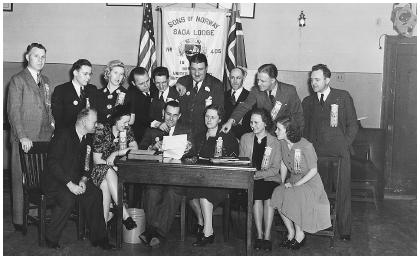 Sons of Norway members in New York in 1940, drawing up papers for a formal protest of Germany's invasion of Norway.
If Norway circa World War II, or its resistance movement are of interest to you, I highly recommend you check out the October 2008 issue of Viking magazine, or click here to read stories from the resistance that we posted on the blog last year. There's also some great articles over at newsinenglish.no on the remembrance and the release of war documents this year.
Wednesday, March 17, 2010
St Patrick's Day: A Norwegian Holiday?
Driving in to work today there certainly was a lot of green to be seen (and I don’t mean grass or blooming plants). It's St Patrick’s Day again and there are A LOT of folks “getting their Irish on” today. Be they Irish diaspora or fans of good old fashioned revelry, there’s never a shortage of people who like to make a big celebration of St Patrick’s Day and Irish heritage & culture around these parts.
That being the case, I thought it only fair to blog about Norway’s impact on Irish heritage and culture. For example, can you tell me what Dublin, Cork, Wexford, Limerick, Howth and Fingall all have in common? I’ll give you this one—at one point each of these well-known Irish cities were Norwegian/Viking settlements.
That’s right, in fact the Viking/Irish interaction was so well known it was not only documented in Viking saga’s, it was also detailed in the Annals of the Kingdom of Ireland by the Four Masters the Annals of Clonmacnoise and The War of the Gaedhil with the Gaill. Further accounts can be found in the arabic writings of the accounts of Ibn Ghazal.
You see in the 700s, pressure on land in Scandanavia had forced many nobles and warriors to seek land elsewhere. Some of these were younger sons, who stood to inherit nothing of their father's estate. Noblemen with little to lose began to gather together groups of warriors and go down the coast pillaging settlements. With the invention of Viking long boats, the raiders eventually began reaching further across the cold waters of the North Sea. By the late 700’s the Vikings were finding themselves on the shores of modern day England and Ireland.
At first the Vikings came for riches and slaves, finding both in large supply within Ireland’s abundant Christian monasteries. Often, the slaves were sold to Vikings traveling back to Norway, but many were kept in Ireland working in a Viking-held town (I’ve heard that this was such a prevalent practice that even today there are remnants of Irish tartans found in Norwegian bunad materials).
However, this raiding period would not last long, and by 950 the Vikings had stopped raiding in Ireland altogether and developed instead as traders and settled in the lands around their towns. It was during this time that Norwegian culture really affected Ireland by providing place names, like Dublin, Cork, Limerick, Waterford, Wexford, Strangford, Leixlip, Carlingford, Youghal, Howth, Dalkey and Fingall [an area of modern-day Dublin]. Also a few of their words were also adopted into the Irish language.
So, today, when you celebrate St Patrick’s Day with a green beer and an old folk song, be sure to offer at least one toast to Norway.
If you want to read more about Norway’s interaction with Ireland, I suggest:
The Viking Answer Lady
and
Wesley Johnston's pre-Norman history
That being the case, I thought it only fair to blog about Norway’s impact on Irish heritage and culture. For example, can you tell me what Dublin, Cork, Wexford, Limerick, Howth and Fingall all have in common? I’ll give you this one—at one point each of these well-known Irish cities were Norwegian/Viking settlements.
That’s right, in fact the Viking/Irish interaction was so well known it was not only documented in Viking saga’s, it was also detailed in the Annals of the Kingdom of Ireland by the Four Masters the Annals of Clonmacnoise and The War of the Gaedhil with the Gaill. Further accounts can be found in the arabic writings of the accounts of Ibn Ghazal.
You see in the 700s, pressure on land in Scandanavia had forced many nobles and warriors to seek land elsewhere. Some of these were younger sons, who stood to inherit nothing of their father's estate. Noblemen with little to lose began to gather together groups of warriors and go down the coast pillaging settlements. With the invention of Viking long boats, the raiders eventually began reaching further across the cold waters of the North Sea. By the late 700’s the Vikings were finding themselves on the shores of modern day England and Ireland.
At first the Vikings came for riches and slaves, finding both in large supply within Ireland’s abundant Christian monasteries. Often, the slaves were sold to Vikings traveling back to Norway, but many were kept in Ireland working in a Viking-held town (I’ve heard that this was such a prevalent practice that even today there are remnants of Irish tartans found in Norwegian bunad materials).
However, this raiding period would not last long, and by 950 the Vikings had stopped raiding in Ireland altogether and developed instead as traders and settled in the lands around their towns. It was during this time that Norwegian culture really affected Ireland by providing place names, like Dublin, Cork, Limerick, Waterford, Wexford, Strangford, Leixlip, Carlingford, Youghal, Howth, Dalkey and Fingall [an area of modern-day Dublin]. Also a few of their words were also adopted into the Irish language.
So, today, when you celebrate St Patrick’s Day with a green beer and an old folk song, be sure to offer at least one toast to Norway.
If you want to read more about Norway’s interaction with Ireland, I suggest:
The Viking Answer Lady
and
Wesley Johnston's pre-Norman history
Monday, November 16, 2009
Norwegian Time Machine: 1924 Telemark Rye Bread
Since the last recipe was a hearty Lapskaus recipe, I thought it might be nice to include a traditional accompaniment: Telemark Rye Bread. Once again, this is the 1924 version of the recipe. For a modern version, check out the link at the bottom of the post.
And if you do give this one a try, please let me know how it turns out. Leave a comment or e-mail me--I'd love to hear if this recipe has held up for the past 85 years.
8-quart kettleful of potatoes
Salt
Graham Rye Flour (sifted)
White flour (sifted)
1 cake compressed yeast or its equivalent in any other good yeast
In the evening boil potatoes very well. Salt more than ordinary. Drain. Put through a potato ricer and mash thoroughly. While hot, work in with a potato masher as much graham-rye and white flour (half of each) as you can. Set aside to cool. When lukewarm, knead using the same proportion of graham-rye and white flour—half of each—as before. Make dough very stiff. When nearly through add the cakeof yeast dissolved in a little water. Let stand over night but not in too warm a place as the large proportion of potatoes causes it to sour very easily. In the morning form into small round loaves. Brushthe tops with a mixture of egg yolk and a little cream. Dent the top of each loaf with the point of the little finger and put immediately in the oven and bake slowly for one and one-half to two hours. Caraway seeds and a little grated primost may be added to the potatoes when mashing if desired.
IMPORTANT—be sure to mash the potatoes well. Don’t let the mixture be too warm when adding the yeast. Do not keep in too warm a place over night. Make dough very stiff as it always softens. Much depends upon carefully following instructions otherwise the bread will not be a success. The dough is sticky and may be hard to handle, requiring patience, but this will be more than rewarded by the finished product.
Now, for a more modern version of this recipe, I found this one, which should be fairly similar, with the exception of the molasses. Anyone up for trying both recipes and reporting back on how they turned out?
And if you do give this one a try, please let me know how it turns out. Leave a comment or e-mail me--I'd love to hear if this recipe has held up for the past 85 years.
8-quart kettleful of potatoes
Salt
Graham Rye Flour (sifted)
White flour (sifted)
1 cake compressed yeast or its equivalent in any other good yeast
In the evening boil potatoes very well. Salt more than ordinary. Drain. Put through a potato ricer and mash thoroughly. While hot, work in with a potato masher as much graham-rye and white flour (half of each) as you can. Set aside to cool. When lukewarm, knead using the same proportion of graham-rye and white flour—half of each—as before. Make dough very stiff. When nearly through add the cakeof yeast dissolved in a little water. Let stand over night but not in too warm a place as the large proportion of potatoes causes it to sour very easily. In the morning form into small round loaves. Brushthe tops with a mixture of egg yolk and a little cream. Dent the top of each loaf with the point of the little finger and put immediately in the oven and bake slowly for one and one-half to two hours. Caraway seeds and a little grated primost may be added to the potatoes when mashing if desired.
IMPORTANT—be sure to mash the potatoes well. Don’t let the mixture be too warm when adding the yeast. Do not keep in too warm a place over night. Make dough very stiff as it always softens. Much depends upon carefully following instructions otherwise the bread will not be a success. The dough is sticky and may be hard to handle, requiring patience, but this will be more than rewarded by the finished product.
Now, for a more modern version of this recipe, I found this one, which should be fairly similar, with the exception of the molasses. Anyone up for trying both recipes and reporting back on how they turned out?
Friday, November 13, 2009
Norwegian Time Machine: 1924 Recipe for Lapskaus
It's the time of year when we are all thinking about food. With Thanksgiving right around the corner it's hard not to, right? As the weather gets colder and the days get shorter, I turn more and more to comfort foods when planning meals at home. I love good hot meals, heavy stews and thick, fragrant sauces. So, today I give you a recipe from 1924 for one of my favorite Norwegian foods, Lapskaus. I first came across this delicacy 8 or 9 years ago when I was visiting the Vegas Viking 6-152 lodge. They made an absolutely wonderful lapskaus with potatoes, and large chunks of meat in a sauce that was beyond belief. I'll never forget that when I asked for the recipe I was told they didn't really use one beyond the various type of ingredients. Too bad for me, right?
Well, in any case, when made correctly it can be the finest, yet most simple meal to enjoy on a cold November night. So, with that, I give you the 1924 recipe and a link to a more current recipe as the one below may be hard to replicate (can you even get "salt meat" anymore?).
Ingredients:
1 soup plate of boiled salt meat
1 soup plate of fresh raw meat
1/2 lb pork
1 qt potatoes
1 small onion
1/2 tsp pepper
Salt
Water
Cut the fresh meat, pork and potatoes into small cubes. Place over the fire in water. Add finely chopped onion, pepper and salt to taste. Boil under cover for about one and one-half hours. Add the salt meat after the fresh meat has boiled for half an hour. Serve.
Well, in any case, when made correctly it can be the finest, yet most simple meal to enjoy on a cold November night. So, with that, I give you the 1924 recipe and a link to a more current recipe as the one below may be hard to replicate (can you even get "salt meat" anymore?).
Ingredients:
1 soup plate of boiled salt meat
1 soup plate of fresh raw meat
1/2 lb pork
1 qt potatoes
1 small onion
1/2 tsp pepper
Salt
Water
Cut the fresh meat, pork and potatoes into small cubes. Place over the fire in water. Add finely chopped onion, pepper and salt to taste. Boil under cover for about one and one-half hours. Add the salt meat after the fresh meat has boiled for half an hour. Serve.
Wednesday, November 11, 2009
Norwegian Time Machine Recipes: Lefse No 1
To the mothers of Norwegian descent in America:
Who with courage and fortitude almost incomprehensible came to this country in advance of civilization
Who have been the centers about which our happy homes have been reared
Who never stinted in toil of the hands of effort of the mind that those about them might be happy
Who by their love, loyalty, interest, enthusiasm, cheerfulness, radiant optimism, and hopefulness
And not least by their observance of customs and occasions and the serving of good things to eat
Did their part in building and maintaining a morale so necessary in the work of transforming the wild forests and prairies of this great country into golden harvest fields, comfortable homes, and thriving cities
This humble volume is respectfully dedicated
The year was 1924 when these words were written and the passage comes from the introduction of a small, green-canvas-hard-cover, frayed on the edges and definitely well-loved cook book of popular Norwegian recipes called (logically) COOK BOOK of POPULAR NORWEGIAN RECIPES.
I found it a while back when I was doing some cleaning and going through the space under my stairs and after reading the above passage I got to thinking that this cook book probably had a number of recipes from our parents’/grandparents’ generations and thus maybe a wider audience. I think we all have at least one or two favorite family recipes that always seem to taste better than modern variants, right? I think of my grandma Almira’s cooking, using recipes that her folks brought over from the old country and how modern recipes never seem to match them.
So, in hopes of helping a few folks out there reconnect with their heritage and to reminisce about times gone by, I’ll be posting a number of these recipes throughout November and December. Now, before we get onto the recipes, here’s a couple items to give this book some historical perspective: Vladamir Lenin had just passed away and Marlon Brando was born; Also Calvin Coolidge was the president of the 48 United States of America and had just given the first ever presidential address from the Whitehouse over the radio.
So, with that, enjoy today’s Time Machine Recipe:
Lefse No 1
Potatoes, as many as desired
Salt
Cream
Flour
Peel potatoes and cook till well done. Mash fine and add a little salt. When cold, add a little cream and flour enough to mold. Sprinkle the molding board well with flour. Take a large spoonful of dough at a time and roll out thin. Bake on top of a moderately warm stove until a very light brown. Turn with a long pointed stick (made for the purpose) and brown lightly on the other side. Fold and place in cloths to keep soft.
Who with courage and fortitude almost incomprehensible came to this country in advance of civilization
Who have been the centers about which our happy homes have been reared
Who never stinted in toil of the hands of effort of the mind that those about them might be happy
Who by their love, loyalty, interest, enthusiasm, cheerfulness, radiant optimism, and hopefulness
And not least by their observance of customs and occasions and the serving of good things to eat
Did their part in building and maintaining a morale so necessary in the work of transforming the wild forests and prairies of this great country into golden harvest fields, comfortable homes, and thriving cities
This humble volume is respectfully dedicated
The year was 1924 when these words were written and the passage comes from the introduction of a small, green-canvas-hard-cover, frayed on the edges and definitely well-loved cook book of popular Norwegian recipes called (logically) COOK BOOK of POPULAR NORWEGIAN RECIPES.
I found it a while back when I was doing some cleaning and going through the space under my stairs and after reading the above passage I got to thinking that this cook book probably had a number of recipes from our parents’/grandparents’ generations and thus maybe a wider audience. I think we all have at least one or two favorite family recipes that always seem to taste better than modern variants, right? I think of my grandma Almira’s cooking, using recipes that her folks brought over from the old country and how modern recipes never seem to match them.
So, in hopes of helping a few folks out there reconnect with their heritage and to reminisce about times gone by, I’ll be posting a number of these recipes throughout November and December. Now, before we get onto the recipes, here’s a couple items to give this book some historical perspective: Vladamir Lenin had just passed away and Marlon Brando was born; Also Calvin Coolidge was the president of the 48 United States of America and had just given the first ever presidential address from the Whitehouse over the radio.
So, with that, enjoy today’s Time Machine Recipe:
Lefse No 1
Potatoes, as many as desired
Salt
Cream
Flour
Peel potatoes and cook till well done. Mash fine and add a little salt. When cold, add a little cream and flour enough to mold. Sprinkle the molding board well with flour. Take a large spoonful of dough at a time and roll out thin. Bake on top of a moderately warm stove until a very light brown. Turn with a long pointed stick (made for the purpose) and brown lightly on the other side. Fold and place in cloths to keep soft.
Thursday, October 15, 2009
Since We're on a Historical Kick Lately...
 One of my favorite stories, Norwegian or otherwise, is that of the Birkebeiners. It's a story I'm sure most everyone reading this is familiar with, but if not you definitely need to check out the Lise Lunge Larson book about their flight and rescue of a future king.
Basically it goes like this, in Norway during the 1200's there were two groups claiming monarchy over Norway. On one side was the ruling family of King Sverre and on the other side were the Baglers. Battles were fought between them over land, ideals and succession, but in the end the fate of Norway fell to a newborn named Håkon Haakonsson.
Håkon was born in territory which was controlled by the Bagler faction, and his mother's claim that he was a birkebeiner royal son placed them both in a very dangerous position. When in 1206 the Bagler tried to take advantage of the situation and started hunting Håkon, a group of Birkebeiner warriors fled with the child, heading for King Inge II of Norway, the birkebeiner king in Nidaros (now Trondheim). On their way they came into a blizzard, and only the two mightiest warriors, Torstein Skevla and Skjervald Skrukka, continued on skis, carrying the child in their arms. They managed to bring the heir to safety.
This event still is commemorated in one of Norway's most important annual skiing event, the Birkebeiner ski race.
Maybe its the father in me, or maybe its the romantic, but there's just something about this story that always stirs up strong emotion. Think about it: two men/warriors facing overwhelming odds are entrusted with a helpless infant who, in their minds, represents hope for the future. Its really an amazing story.
That's why I was stoked to read that the American Birkebeiner Ski Foundation is searching for two tough cross country skiers to dress as Birkebeiner warriors and ski the 54 kilometer journey from Cable to Hayward, Wis., as part of this year's American Birkebeiner.
If you are interested in learning more, you can contact the American Birkebeiner Ski Foundation by clicking here.
Friday, July 3, 2009
Kvinesdal Emigration Festival: Day 1
 Today's events for the Kvinesdal Emigration Festival include a Grand Re-Opening ceremony for the Lister Emigrants Museum. Here's some video of Mayor Omland og Thoralf Haugland at the ceremony. Here's some video of Toralf Haugland opening the festivities.
Then, in about an hour or so (9:30 p.m. Norway time) there is going to be a get-together of Sons of Norway members who are in town for the celebration. I may get a report afterwards, so make sure to check back in a few hours to see if we have more info about todays happenings.
Kvinesdal Emigration Festival: Prelude
Today is the beginning of the Kvinesdal Emigration Festival being held in Kvinesdal, Norway. Sons of Norway's Interim CEO, Eivind Heiberg is over there now preparing to give a welcome speech. I've had the good fortune to have seen an earlier draft and it's going to be great. I believe he's going to talk about Norway and America's strong relationship and how emigration has created a bond between the two countries and intertwined their modern histories together.This, I think, is a very unique experience for modern countries like ours. I mean, even in this age of globalism, there is still an overriding sense of isolation amongst first world countries, making them more business partners than brothers and sisters. Thanks to our shared histories, U.S. and Norway, however, have a relationship more like the latter than former. Definitely something worth celebration, don't you think?
Uh...ahem...[quietly steps down from pulpit]
Anyhow, this is a very unique and special festival. I'm glad Sons of Norway is participating. I spoke with Eivind yesterday about his experiences so far and as of last night he'd had dinner with Toralf Haugeland, one of the main organizers of the festival, and some film makers. I guess that in addition to a good meal they discussed the possibility of our acquiring some new, hard to get, fils for our media lending library. That'll be very cool!
In the mean Eivind sent some video of the Utsikten hotel. Here's some video of the hotel itself. Then, in this video and in this one, too, you can see why the hotel is call Utsikten (translated to English means "the view").
Ok, more later about today's festivities, including the grand opening ceremonies for a new wing on the Listes Emigration Museum.
Wednesday, July 1, 2009
Production has Started on a History Channel Documentary about the Kensington Runestone
 I just got confirmation that there is a new documentary, focusing in part on the Kensington Runestone, in production over at the History Channel. According to reports Committee Films, along with a crew of about 30, spent the day at Kensington Runestone Park recently – filming the story of the Kensington Runestone.
From what I understand about the documentary, the main story revolves around a new theory that the Kensington Runestone may have been a coded message related to the Knights Templar, rather than Viking explorers. Apparently stones with similar markings have been found on the east coast and across the Atlantic, implying that there may actually be something to the authenticity of the artifact.
Supposedly this documentary is even speculating that if the Templars are behind the Runestone there may be a chance that they also brought the Holy Grail over with them.
Yeah, I think it’s a stretch, too. But whatever, if researchers can prove the stone is actually from the 1300’s as has been posited, then it’s one more example of pre-Columbian exploration of the new world. An idea that science has been slow to recognize as both possible and probable.
What’s that? You aren’t familiar with the Kensington Runestone? Oh, well here’s the skinny:
The Kensington Runestone is a slab of greywacke covered in runes on its face and side which, if it is genuine, would suggest that Scandinavian explorers reached the middle of North America in the 14th century. It was found in 1898 in the largely rural township of Solem, Douglas County, Minnesota, and named after the nearest settlement, Kensington.
Depending on who you ask, it could be a 19th century forgery or an important archaeological find from the 14th century. Those who ascribe a Scandinavian origin to the stone claim it shows evidence of obscure medieval runes and intersecting word forms that would have been unknown to potential forgers in the 1800s. These advocates tend to be enthusiastic but often lacking in professional credentials (Viking-origin proponent Keith Massey holds a Ph.D. from the University of Wisconsin-Madison, where Erik Wahlgren taught). Interested professional archaeologists, historians, and Scandinavian linguists generally question the stone's provenance.
Here's a good video on the Runestone and some info on its possible link to the Knights Templar. Anyone have any thoughts on what the Runestone could be? Share them in the comments section.
Wednesday, June 10, 2009
Scandinavian Hjemkomst Festival: It's almost that time of year again!
 It's almost that time of year again when Nordic folk from around the Midwest will be come together and celebrate their shared heritage at the 32nd Annual Scandinavian Hjemkomst Festival, being held from June 26-28 at the Hjemkomst Center in Moorhead.
It's always been a fun event for me, partly because the the variety that the festival is known for. Not only do vendors and entertainers change from year-to-year, so does the national focus. This year, for example, Hjemkomst is bringing some great programs highlighting Finnish culture and traditions.
I know, I know, you're probably asking yourself why the Sons of NORWAY blog is participating in an event that's focusing on Finnland, right? The answer is simple: our mission, beyong preserving Norwegian heritage and culture, is to celebrate our relationship with other Nordic countries. We all have a shared heritage and a shared pride in where we/our ancestors came from and Hjemkomst is a great event that focuses on that fact.
This year will be no different in that Hjemkomst is bringing in a lot of great traditional and modern programming and music. Think about the rocks of Scandinavia’s geology, steamy sauna rocks, stories told by grandparents in the heirloom rocking chair and electrified traditional Nordic instruments that rock! Deeply rooted Nordic arts and traditions along with the modern Scandinavian cultures will be showcased.
A variety of Scandinavian music genres from Denmark, Finland, Iceland, Norway, Sweden and Saamiland will provide something for everyone at the Festival. One can hear the ancient sounds of the drum and Saami Yoik, to the traditional and electrified Finnish Kantele; as well as fiddles, accordions, and songs by one voice to a full chorus.
It's going to be a really exciting event and Sons of Norway is proud to be a Festival Sponsor of this year's festival. We're all over the place at this year's event--Kringen lodge will have a booth on level 1, the Heritage Stage/Sons of Norway stage are on level 2 and Sons of Norway International will have a booth on level 3. Be sure to stop at one of our locations and say hello!
Tuesday, June 9, 2009
Lodges in the News
As you may remember, I posted about a lodge discovering a time capsule beneath one of its old lodge buildings There's a nice article online about the District 2 lodge that opened it up this past Saturday. According to the article, "Doug Dixon, a member of the Sons of Norway, Leif Erikson Lodge, with good-natured groans hammered at the box with a chisel, the lid gave way revealing Dec. 29, 1950, copies of what was then known as The Seattle Daily Times, the Seattle Post-Intelligencer and the Washington Posten Norwegian newspaper; newsletters from Valkyrien Lodge Daughters of Norway; and documents related to the founding of the Leif Erikson Lodge, the Norwegian Men's Chorus and others."
Pretty cool stuff. I'd be interested to hear what kinds of lodge documents they found.
Pretty cool stuff. I'd be interested to hear what kinds of lodge documents they found.
Monday, May 25, 2009
Lodges in the News
It looks like this year's Syttende Mai celebrations were especially successful. There were parades, lodge events and special meals enjoyed by communities throughout the North American and Norway. Congratulations to everyone who hosted a Syttende Mai event this year!
As a little recap I've found some news stories about Sons of Norway lodges and their Syttende Mai celebrations that are great examples for other lodges who are thinking of hosting their own in the future.
Here's one about Nordkap lodge in Detroit, MI.
This one comes from Løven lodge in Eau Claire, WI.
And here is a photo album of images from the Petersburg, AK lodge's celebration.
As a little recap I've found some news stories about Sons of Norway lodges and their Syttende Mai celebrations that are great examples for other lodges who are thinking of hosting their own in the future.
Here's one about Nordkap lodge in Detroit, MI.
This one comes from Løven lodge in Eau Claire, WI.
And here is a photo album of images from the Petersburg, AK lodge's celebration.
Thursday, May 21, 2009
Syttende Mai in Brooklyn!
Today we have the promised post from our own Nichole who was on hand for the Syttende Mai celebration in New York this past weekend. Enjoy!
 Ah, it seemed a cool day when setting out for Bay Ridge, Brooklyn, but once taking in the sights there, I forgot all about the weather! For just over two hours in the afternoon, hundreds of Norwegians (and those with Norwegian leanings), took to the streets to celebrate Norwegian Independence with a fantastic parade.
Cheers of “Hurra, hurra for Syttende Mai!” broke out spontaneously on the street with some frequency, with smiling bystanders joining in the fun and festivities. Tons of Norwegian flags lined the streets, waving at the marchers and parade participants. Even street vendors seemed to get in the spirit.
These are a few of my favorite photos from Sunday’s celebrations.
The modern and the traditional:

Representing District 3 with, um, zeal, Roy Berntsen:

And, who knew the Scots were so supportive of Norwegian Independence? This is one of the two(!) bagpipe ensembles marching for Syttende Mai.

It was great to see so many of our international officers and District 3 officers and lodge members. Check back on the blog later this week and next for some video of this great event, as well some lovely photos of the Sons of Norway youth contribution to Syttende Mai Brooklyn!
 Ah, it seemed a cool day when setting out for Bay Ridge, Brooklyn, but once taking in the sights there, I forgot all about the weather! For just over two hours in the afternoon, hundreds of Norwegians (and those with Norwegian leanings), took to the streets to celebrate Norwegian Independence with a fantastic parade.
Cheers of “Hurra, hurra for Syttende Mai!” broke out spontaneously on the street with some frequency, with smiling bystanders joining in the fun and festivities. Tons of Norwegian flags lined the streets, waving at the marchers and parade participants. Even street vendors seemed to get in the spirit.
The modern and the traditional:

Representing District 3 with, um, zeal, Roy Berntsen:

And, who knew the Scots were so supportive of Norwegian Independence? This is one of the two(!) bagpipe ensembles marching for Syttende Mai.

It was great to see so many of our international officers and District 3 officers and lodge members. Check back on the blog later this week and next for some video of this great event, as well some lovely photos of the Sons of Norway youth contribution to Syttende Mai Brooklyn!
Wednesday, May 20, 2009
The Simpsons Strike a Chord on Syttende Mai
Did anyone happen to catch last Sunday's episode of The Simpsons? If so, you were treated to a special Syttende Mai treat as the episode had Norwegian immigrants "from Ogdenville" as the main focus of the story line. In truth, Matt Groening was making a commentary on U.S./Mexico immigration issues, but he supplanted Norwegians in the place of Mexican immigrants.
After watching the show, I got to thinking about whether Groening, the Simpsons creator, may have also been tipping his cap to the way Norwegians were treated in the early days of their mass immigration to the U.S. I mean, the fact that this episode ran on Syttende Mai couldn't have been a coincidence, right? It got me so curious, in fact, that I asked Colin, our man in the "cultural" know at Sons of Norway HQ, whether or not Norwegians had ever suffered from discrimination due to their immigrant status?
After looking into the subject a bit, here's what he found:
Not so long ago, Norwegians, Scandinavians and other Northern Europeans did indeed experience a degree of discrimination right here in the United States. In fact, the very existence of Sons of Norway is, in a sense, a product of discrimination against these new Americans. You see in the late 1800s immigrants were generally barred from buying life insurance, and so the organization was founded to provide basic financial protection to people who otherwise couldn’t get them.
Like other immigrant groups throughout history, Nordics were selected for the most difficult and dangerous jobs that other workers didn’t want. Specifically, Norwegian immigrants worked in shipping, fishing and logging; later many Finish immigrants found work in the logging camps and mines of Northern Minnesota and Michigan; and a mainly Swedish workforce in Minnesota built James J Hill’s railroad empire. In fact, Hill, a legendary tycoon, was so fond of his cheap Swedish workforce he once said of them, “Give me snuff, whiskey and Swedes and I can damn well build a railroad down to hell.” Some native-born Americans viewed the new workers from across the sea with resentment, calling them “squareheads” or “scandihoovians.”
Then, in the period around World War I America was stricken by a pandemic of anti-immigrant hysteria. Immigrants of all nationalities were ridiculed in public and the press by intolerant “nativists” who felt that America belonged only to them. Norwegian-language newspapers, for example, were targeted under the suspicion that they might be stirring up anti-war or anti-American sentiment. Many immigrants adopted American names and stopped speaking their native languages altogether.
Another particularly disturbing example of this happened in my home town, Duluth, Minnesota, in 1918. A group of vigilantes calling themselves the “Knights of Liberty” lynched a Finnish man, Olli Kinkkonen, from a tree in Duluth’s Lester Park, just blocks from where I grew up. Believing him to be an anti-war agitator the mob dragged Kinkkonen from a boarding house, tarred and feathered him, then hung him from a tree. You can read more about Olli’s story here.
At the same time Scandinavian immigrants benefited enormously from the opportunities afforded to them. Most Norwegian and Swedish immigrants arrived during the latter half of the 19th century, when America needed hardworking people to head west and settle the rapidly-expanding country. Of key importance was the passage of the Homestead Act in 1862, which gave away at least 160 acres to anyone if they simply lived on the land and developed it. Norwegians, Swedes, and Danes settled especially in the Midwest and participated eagerly in American society, getting involved in local government and founding schools and churches. They also formed Sons of Norway and other organizations like it, so that they could maintain and celebrate the heritage and culture of their old country while making the transition to their new one.
I was amazed at everything that Colin found. I had no idea how prevalent discrimination against Scandinavians was here in the U.S. and I think it's a very interesting topic that a lot of folks may not know about. Now, I'm guessing The Simpsons were trying to make a little different point, about showing a little more tollerance towards newly arrived citizens, but I like to think the show was also giving a wink to the interesting history of Scandinavians in America and celebrating their successes.
After watching the show, I got to thinking about whether Groening, the Simpsons creator, may have also been tipping his cap to the way Norwegians were treated in the early days of their mass immigration to the U.S. I mean, the fact that this episode ran on Syttende Mai couldn't have been a coincidence, right? It got me so curious, in fact, that I asked Colin, our man in the "cultural" know at Sons of Norway HQ, whether or not Norwegians had ever suffered from discrimination due to their immigrant status?
After looking into the subject a bit, here's what he found:
Not so long ago, Norwegians, Scandinavians and other Northern Europeans did indeed experience a degree of discrimination right here in the United States. In fact, the very existence of Sons of Norway is, in a sense, a product of discrimination against these new Americans. You see in the late 1800s immigrants were generally barred from buying life insurance, and so the organization was founded to provide basic financial protection to people who otherwise couldn’t get them.
Like other immigrant groups throughout history, Nordics were selected for the most difficult and dangerous jobs that other workers didn’t want. Specifically, Norwegian immigrants worked in shipping, fishing and logging; later many Finish immigrants found work in the logging camps and mines of Northern Minnesota and Michigan; and a mainly Swedish workforce in Minnesota built James J Hill’s railroad empire. In fact, Hill, a legendary tycoon, was so fond of his cheap Swedish workforce he once said of them, “Give me snuff, whiskey and Swedes and I can damn well build a railroad down to hell.” Some native-born Americans viewed the new workers from across the sea with resentment, calling them “squareheads” or “scandihoovians.”
Then, in the period around World War I America was stricken by a pandemic of anti-immigrant hysteria. Immigrants of all nationalities were ridiculed in public and the press by intolerant “nativists” who felt that America belonged only to them. Norwegian-language newspapers, for example, were targeted under the suspicion that they might be stirring up anti-war or anti-American sentiment. Many immigrants adopted American names and stopped speaking their native languages altogether.
Another particularly disturbing example of this happened in my home town, Duluth, Minnesota, in 1918. A group of vigilantes calling themselves the “Knights of Liberty” lynched a Finnish man, Olli Kinkkonen, from a tree in Duluth’s Lester Park, just blocks from where I grew up. Believing him to be an anti-war agitator the mob dragged Kinkkonen from a boarding house, tarred and feathered him, then hung him from a tree. You can read more about Olli’s story here.
At the same time Scandinavian immigrants benefited enormously from the opportunities afforded to them. Most Norwegian and Swedish immigrants arrived during the latter half of the 19th century, when America needed hardworking people to head west and settle the rapidly-expanding country. Of key importance was the passage of the Homestead Act in 1862, which gave away at least 160 acres to anyone if they simply lived on the land and developed it. Norwegians, Swedes, and Danes settled especially in the Midwest and participated eagerly in American society, getting involved in local government and founding schools and churches. They also formed Sons of Norway and other organizations like it, so that they could maintain and celebrate the heritage and culture of their old country while making the transition to their new one.
I was amazed at everything that Colin found. I had no idea how prevalent discrimination against Scandinavians was here in the U.S. and I think it's a very interesting topic that a lot of folks may not know about. Now, I'm guessing The Simpsons were trying to make a little different point, about showing a little more tollerance towards newly arrived citizens, but I like to think the show was also giving a wink to the interesting history of Scandinavians in America and celebrating their successes.
Sunday, May 17, 2009
Hurrah for Syttend Mai!
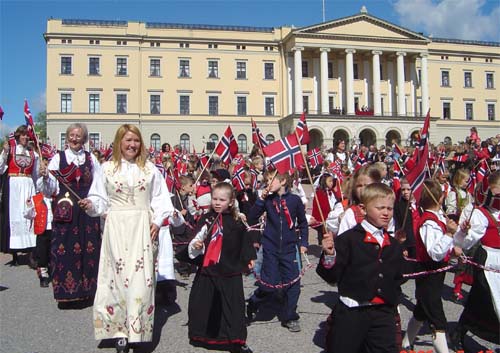
Today millions in Norway, the U.S. and Canada are celebrating Norway's 195th Constitution Day, also called Syttende Mai (17th of May). The celebration marks the signing of Norway's constitution in Eidsvoll, which declared Norway to be an independent nation.
Celebrations are happening today in most major U.S. cities and if you want to see what's going on in your neck of the woods, check out the Events Calendar at sonsofnorway.com.
Thursday, May 14, 2009
Time Capsule Found in Seattle
I just received a very interesting e-mail from our Leif Erikson lodge in Seattle, WA. According to the communique I received yesterday a time capsule, possibly dating as far back as 1915, was discovered by demolition crews at the site of the Mountaineers Club, formerly the Norway Center building, located at 300 3rd Ave West in Seattle.
The History
Apparently on January 24, 1915, Leif Erikson Lodge and the Daughters of Norway lodge Valkyrien worked together in laying the cornerstone for Norway Hall at 2015 Boren Ave. This is where the local Sons of Norway lodge would meet at until it was decided, in 1949, that a new location was needed.
On June 7th of that year a site for a new building was purchased and construction began on what would become the Norway Center, at the corner of Third Avenue West and West Thomas Street at the foot of Queen Anne Hill. The cornerstone dedication of this building took place on New Year’s Eve, December 31, 1950.
The Mystery
Because of the use of different locations for meetings, it is not known whether the newly found time capsule was orginally placed under Norway Hall in 1915 and relocated or initially created and sealed at the time of the dedication of the Norway Center in 1950.
The Unsealing
Upon the discovery of the time capsule Russ Oberg, President of Leif Erikson Lodge 2-001, Sons of Norway and Tom Stang, Retired Consul of the Royal Norwegian Consulate and a Past President of the Lodge were called in. Together they decided to unseal and open the time capsule at the current home of the the Leif Erikson Lodge at 2245 NW 57th Street in Seattle. Members of the Sons of Norway, the Valkyrien Lodge, Daughters of Norway and the Norwegian Male Chorus will be in attendance. The unsealing will be held at 3 pm on June 7th.
Being a nostalgic kind of person I find this kind of thing to be very cool and am left wishing I could be in Seattle when they crack open the time capsule. I'd love to hear from anyone who is planning to attend the opening ceremony. I think our readers would love to hear more about the time capsule and its contents.
The History
Apparently on January 24, 1915, Leif Erikson Lodge and the Daughters of Norway lodge Valkyrien worked together in laying the cornerstone for Norway Hall at 2015 Boren Ave. This is where the local Sons of Norway lodge would meet at until it was decided, in 1949, that a new location was needed.
On June 7th of that year a site for a new building was purchased and construction began on what would become the Norway Center, at the corner of Third Avenue West and West Thomas Street at the foot of Queen Anne Hill. The cornerstone dedication of this building took place on New Year’s Eve, December 31, 1950.
The Mystery
Because of the use of different locations for meetings, it is not known whether the newly found time capsule was orginally placed under Norway Hall in 1915 and relocated or initially created and sealed at the time of the dedication of the Norway Center in 1950.
The Unsealing
Upon the discovery of the time capsule Russ Oberg, President of Leif Erikson Lodge 2-001, Sons of Norway and Tom Stang, Retired Consul of the Royal Norwegian Consulate and a Past President of the Lodge were called in. Together they decided to unseal and open the time capsule at the current home of the the Leif Erikson Lodge at 2245 NW 57th Street in Seattle. Members of the Sons of Norway, the Valkyrien Lodge, Daughters of Norway and the Norwegian Male Chorus will be in attendance. The unsealing will be held at 3 pm on June 7th.
Being a nostalgic kind of person I find this kind of thing to be very cool and am left wishing I could be in Seattle when they crack open the time capsule. I'd love to hear from anyone who is planning to attend the opening ceremony. I think our readers would love to hear more about the time capsule and its contents.
Tuesday, May 12, 2009
Hurra for Syttende Mai!
 Syttende Mai is one of the most visual celebrations of our connection to our heritage, with parties and parades taking place wherever there is a population with ties to Norwegian heritage. How will you celebrate the independence of Norway?
We’ll be reporting from one classic celebration in Brooklyn, New York. Marking this important holiday since 1952, Bay Ridge hosts one of the largest Syttende Mai gatherings in the United States.
Joining District 3 and President Dan Rude, Sons of Norway’s Nichole will be on hand to document the event and report (semi-)live! With 10,000 expected marchers lining up under the theme of “Norse Mythology,” and 100,000 spectators, this will surely be an exciting celebration!
In addition to the large parade, Sissel Breie, Consul General of Norway, will be on hand to present a short program before the annual Church rally that ends the day in a typical Norwegian-American fashion: with food and music.
Check back here for pictures and video of the over 20 participating lodges!
What will you do on Syttende Mai? Where are the notable celebrations in your community? Share with readers in the comments section!
Tuesday, May 5, 2009
Today in History: A Government in Exile
On this day in 1940 Norway formed a Government in Exile in London. However the story really begins almost a month earlier on the afternoon of April 9, 1940. Following the initial Nazi invasion of Norway the Storting knew that it would be pursued, oppressed and possibly dissolved, so it convened and unanimously enacted the Elverumsfullmakten (Elverum Authorization). This authorization granted the Norwegian Cabinet full powers to protect the country until such time as the Storting could meet again. This effectively gave full governmental control to King Haakon VII and his cabinet while they were in London.
Subscribe to:
Posts (Atom)
